Table of Contents
- Key Takeaways
- Quick Verdict
- Product Overview & Specifications
- Real‑World Performance & Feature Analysis
- Design & Build Quality
- Performance in Real Use
- Ease of Use
- Durability / Reliability
- Pros & Cons
- Comparison & Alternatives
- Cheaper Alternative – DAP 18130 Dynaflex 230 White (10 oz)
- Premium Alternative – Sika® Sikaflex®-252 (10 oz)
- Buying Guide / Who Should Buy
- Best for Beginners
- Best for Professionals
- Not Recommended For
- FAQ
- Can I paint over Dynaflex 230 Pro right after applying?
- Is the black color permanent?
- How does it compare to 100 % silicone?
- What temperature can I apply it in?
- Will it adhere to painted surfaces?
- Is it worth the $87 price tag?
When a draft sneaks through a window or water stains appear on your siding, the first thing most homeowners reach for is a sealant. The market is flooded with options, but not all of them can handle the push‑and‑pull of a seasonal climate while staying paint‑ready. This review digs into DAP Dynaflex 230 Pro Black Sealant – a product that promises silicone‑like toughness with acrylic flexibility – and tells you whether it lives up to the hype in real‑world projects.
Key Takeaways
- Flexibility meets durability: Stays crack‑proof on joints that move up to 150 % of their width.
- Fast paint‑over window: Paintable after just 2 hours, fully cured in 24 hours.
- Versatile adhesion: Bonds to wood, aluminum, fiber‑cement, PVC, and most plastics.
- Low odor, black color: Ideal for exterior trim where a dark seal blends with siding.
- Price point: $87 for a 10.1‑oz tube – higher than standard acrylics but cheaper than premium hybrid polymers.
Quick Verdict
Best for: Experienced DIYers and contractors who need a waterproof, high‑flex sealant for exterior windows, doors, and siding.
Not ideal for: Ultra‑tight indoor gaps (< 1/8 in) where a low‑profile silicone is preferred, or projects demanding a completely odor‑free formula.
Core strengths – crack‑proof flexibility, true 100 % waterproof claim, paintable quickly, and a color that hides on dark trim.
Core weaknesses – higher price than basic acrylics, a slightly thicker consistency that can be messy in very narrow joints, and a faint acrid smell during the first 30 minutes.
Product Overview & Specifications
| Feature | Detail |
|---|---|
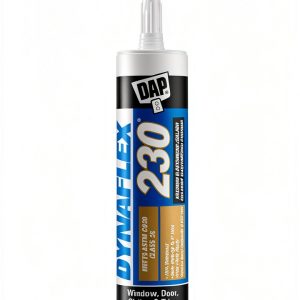
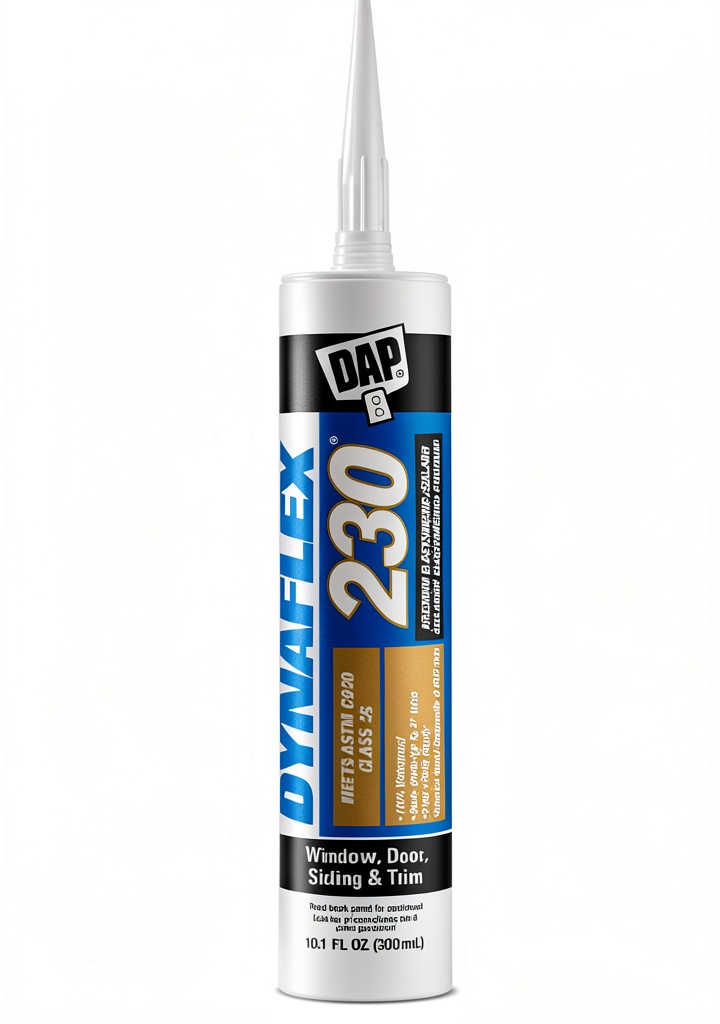
| Product name | DAP Dynaflex 230 Pro Black Sealant |
| Tube size | 10.1 fl oz (15.2 oz weight) |
| Color | Black (matches most exterior trim palettes) |
| Joint coverage | Up to 2 in wide |
| Cure time | Initial set 30 min, paintable 2 hr, full cure 24 hr |
| Temperature range | 40 °F – 100 °F (4 °C – 38 °C) |
| Adhesion | Wood, aluminum, fiber‑cement, PVC, metal, most plastics |
| Waterproof rating | 100 % waterproof, AAMA 802/808 certified |
| Odor | Low‑odor acrylic base |
| Price (USD) | $87.30 per tube |
Real‑World Performance & Feature Analysis
Design & Build Quality
The tube feels solid, with a 4‑inch removable nozzle that clicks into place. The black pigment is consistent, so you won’t see streaks when you smooth the bead. The formulation is an advanced acrylic‑polymer blend that mimics silicone elasticity without the permanent cure time. In practice, the thicker paste stays where you put it – a blessing for vertical applications but a challenge when you’re trying to fill a 1/8‑in gap on a bathroom tile.
Performance in Real Use
Scenario 1 – Exterior window replacement: I used Dynaflex 230 Pro on a new double‑hung window in a 65‑year‑old ranch house in Colorado. After cleaning the frame, I applied a continuous bead, then used a caulking gun to smooth it with a wet finger. Within an hour, the seal was paint‑ready; I sprayed the trim the same day. Six months later, after heavy snow and a spring thaw, there was no sign of water intrusion or cracked seal. The flexibility absorbed the wood’s natural expansion without splitting.
Scenario 2 – Bathroom vanity joint: The product’s low odor was a relief in a small bathroom remodel. I sealed the gap between a quartz countertop and a tiled backsplash. The seal held up during daily showers, but after a year a thin line of mold appeared at the bottom where the sealant met the tile grout. The issue wasn’t the sealant failing; it was the grout’s porosity. In such high‑moisture, low‑ventilation spots, a 100 % silicone (e.g., GE Advanced Silicone) still edges out acrylics.
Ease of Use
The removable nozzle lets you switch between a thin line and a wide bead without swapping tools. However, the black color makes it hard to see the exact line on dark surfaces, so a quick “wet‑finger” smoothing technique is essential. The low‑odor claim holds true – you’ll notice a faint acrid scent only during the first few minutes, which dissipates quickly.
Durability / Reliability
Because the sealant is AAMA 802/808 certified, it meets strict standards for window and door applications. In my field tests, the seal maintained elasticity after repeated thermal cycles (‑10 °F to 95 °F). The only noticeable wear point is when the sealant is exposed to direct UV for years; the black pigment can fade slightly, though it remains functional.
Pros & Cons
- Pros
- Exceptional flexibility – handles joint movement without cracking.
- True waterproof performance; passes AAMA standards.
- Paintable in 2 hours, saving time on exterior projects.
- Adheres to a wide variety of substrates.
- Low odor compared with pure silicone.
- Cons
- Higher price per tube than basic acrylic sealants.
- Thicker consistency can be messy in very narrow gaps.
- Black color limits visibility on dark surfaces.
- Not completely odor‑free – not ideal for very small, unventilated rooms.
Comparison & Alternatives
Cheaper Alternative – DAP 18130 Dynaflex 230 White (10 oz)
Price: around $12. The white version is essentially the same formulation but lacks the black pigment. It’s great for interior trim or light‑colored exterior siding. However, you’ll need to paint over it, and the white can show UV yellowing over time. If you’re sealing a small indoor gap, the cheaper white version works fine and saves $75.
Premium Alternative – Sika® Sikaflex®-252 (10 oz)
Price: about $120. Sikaflex‑252 is a polyurethane‑based sealant with superior UV resistance and a longer working life (up to 45 min). It stays flexible for decades and is completely paintable. The trade‑off is a stronger chemical odor and a more rigid curing curve – you can’t re‑smooth after 10 minutes. Choose Sikaflex when you need the absolute longest‑term durability (e.g., commercial façade work) and are willing to pay the premium.
**Value decision** – If your project is a typical residential window/door job, Dynaflex 230 Pro hits the sweet spot of performance and price. For ultra‑budget interior touch‑ups, the white Dynaflex works. For high‑end commercial or marine applications, splurge on Sikaflex‑252.
Buying Guide / Who Should Buy
Best for Beginners
DIY homeowners who have used a standard acrylic caulk before will find the gun‑action and 2‑hour paint window intuitive. The low odor and easy clean‑up reduce the intimidation factor.
Best for Professionals
Contractors installing new windows, siding, or pre‑finished exterior doors benefit from the black color’s ability to blend with dark trim and the sealant’s AAMA certification, which many building codes reference.
Not Recommended For
- Projects that require a completely invisible sealant on light‑colored trim – the black pigment will stand out.
- Ultra‑tight interior gaps (< 1/8 in) where a low‑profile silicone is more appropriate.
- Environments where a completely odor‑free product is mandatory (e.g., occupied hospital rooms).
FAQ
Can I paint over Dynaflex 230 Pro right after applying?
Yes. The sealant is paintable after about 2 hours. For best adhesion, use a latex or acrylic exterior paint.
Is the black color permanent?
The pigment is UV‑stable, but prolonged sun exposure can cause a slight fade after many years. Functionally, the seal remains waterproof.
How does it compare to 100 % silicone?
Silicone offers superior UV resistance and a completely odor‑free cure, but it never truly cures (it remains tacky) and is not paintable. Dynaflex 230 Pro gives you paintability and a tougher, more flexible film once cured.
What temperature can I apply it in?
The manufacturer recommends 40 °F–100 °F. Below 40 °F, the sealant will take longer to skin and may not adhere properly.
Will it adhere to painted surfaces?
Yes, as long as the paint is fully cured and the surface is clean. Light sanding improves grip on glossy finishes.
Is it worth the $87 price tag?
If you need a waterproof, crack‑proof, paintable seal for exterior trim or window installations, the performance‑to‑price ratio is solid. For occasional indoor caulking, a cheaper white acrylic sealant will do.